
Interview with Martin Bächtold, CEO of TTN Translation Network and inventor of TermBoy
Geneva, July 2026

For more than three decades, Martin Bächtold has been developing translation technology in Geneva. With TermBoy he has created an AI agent that builds, harmonises and publishes specialist terminology on the web on its own – and that, almost as a side effect, makes companies visible in the answers of ChatGPT, Claude and Gemini. A conversation about word salad, the standard metre and starving chatbots.
How did you come to program terminology databases?
I studied and worked in Silicon Valley. When I returned to Geneva, I programmed the first server for exchanging translations via modem. It ran fully automatically, and translations became much cheaper as a result. But when I checked them, my hair stood on end.
Why?
There were no terminology databases back then, and translators rendered the technical terms as they saw fit. When three translators worked on a thousand-page manual for a telephone system, we ended up with four or five terms for one and the same object. It drove readers mad.
Why is a uniform language so important?
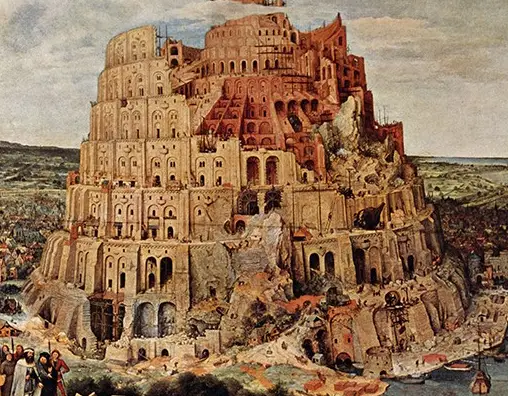
Without language you can build a bird’s nest at best – with language you can build Versailles. But the terms have to be agreed among the craftsmen, otherwise it ends like the Tower of Babel.
In the Middle Ages, little Switzerland had around 280 different units of length. That made trade extremely difficult, and until the middle of the 19th century, famines regularly carried off the poorest part of the population. Then, in 1799, the standard metre was deposited in Paris. It was one of the cornerstones of an explosion in productivity: only the standardisation of units and norms allowed trade and prosperity to grow. Uniform standards and a uniform language are the foundation of economic prosperity.
Why do AI translations so often work so badly?
First came DeepL in 2017, then ChatGPT in 2022 – both translate quickly and practically for free. Many customers with large online catalogues were initially dazzled by the quality: the translations were seductively well phrased but wrong from start to finish. A button was built into every content management system – “Translate with DeepL” – and for a few centimes you got the translation that used to cost hundreds of francs.
But DeepL and ChatGPT translate like the translators of the early nineties: the terms are freely invented and change with every text – an enormous word salad. When customers ordered, they received the wrong product; the sales staff lost track. Many companies went back to classic translation, but by then it was often too late: the rot had set in everywhere.
Why did you invent TermBoy?
There is a yawning gap between the language of a translator and the language spoken in a workshop or a factory. Take a watchmaker’s workshop or a body shop: the translator in his office has no idea how people talk there – and when he delivers his text, the specialists clutch their heads.
So we built a system that collects the terms from customers’ websites, adds images, sample texts, references to standards and Wikipedia as well as usage examples, and stores everything in a database. Every text that needs translating is scanned by an AI for new terms. If it contains terms that are not yet defined, they are sent via WhatsApp or e-mail to a subject expert for validation. TermBoy is the bridge between the workshop and the translator’s office.
All translators today work with so-called CAT tools that integrate translation memories and terminology databases, so they can access the terms directly. With this system, technical terms can be harmonised with very little effort – and an entire industry benefits: apprentices, teachers, translators, sales, insurers and customers.
How can TermBoy improve visibility for artificial intelligence?
That was a zero-shot effect – an effect that was never intended in the first place. We published the terms and the links in the sitemap file, and suddenly it was like feeding pigeons: the chatbots flocked together and fought over the terms like starving birds.

When we then ran automatic translations, we saw that the bots access TermBoy and use the terms in their answers. This is all still at an experimental stage, but we expect professional associations and customers with a broad product range to benefit enormously. When everyone uses the same terms, everything becomes simpler – and it runs like clockwork.
What does TermBoy cost?
Less than many think: five centimes per term and language version for creation, then one centime per year on subscription. A database of 10,000 terms in four languages therefore costs, excluding installation, around 2,000 francs to create and 400 francs per year – including AI computing costs, operation, backup and maintenance. Built by hand, the same database would come to almost 400,000 francs. For the first time, uniform terminology is affordable for SMEs and associations too.
How is TermBoy set up?
TermBoy is set up individually for each customer. In the automotive or watch industry, the AI collects suitable photos and illustrates the term so that you immediately understand what it is. In finance it is more complicated: what do you want to show – a banknote? Here the definition, the sample sentences and the cross-references are decisive.
Some customers also want their products included in the database with a picture and their characteristics summarised. Associations, NGOs or interest groups, in turn, want to stake out their specialist topics with precise definitions so that the AI can form the most concrete possible picture of their concerns – and reproduce them correctly in its answers. That is why, during set-up, we jointly define which sources are authoritative, which fields an entry contains and who approves the entries.
Can you trust an AI’s terms at all?
You must not trust it blindly – which is why TermBoy calculates a reliability code for every entry, based on how frequently and how consistently a term is used in the sources. If reliability is below 80 percent, the entry is automatically sent by SMS, WhatsApp or e-mail to one of the customer’s subject experts. They check, correct and approve it. The machine does the legwork, the human has the last word – just like the four-eyes principle we have applied to translation for decades.
And where do the data stay?
In Switzerland. The termbase runs on our own servers in Geneva, and we are certified to ISO 27001 for information security – alongside ISO 9001 and ISO 17100 for translation services. We use AI models for research, but control over the database stays with the customer: it is their terminology.
Where will specialist terminology be in five years?
I hope: where units of measurement have been since the standard metre. Every industry agrees on its terms, publishes them in machine-readable form, and humans and machines alike draw on the same definitions. AI is accelerating this development enormously, because for the first time it makes terminology affordable. Whoever puts their terminology in order now will have a say in five years – whoever doesn’t will simply be passed over by the chatbots.
More about TermBoy: Frequently asked questions (FAQ) · Pricing & plans · Request a demo